


The impact of ESLCTA extends beyond individual participants to families and the broader East St. Louis community. When youth bring racquets home and invite siblings, parents, or caregivers to play, physical activity becomes a shared family experience. This strengthens family relationships while promoting healthier routines and reinforcing the idea that wellness can be community-owned rather than institutionally controlled.
Strengthening Families
Families benefit when youth develop increased confidence, stronger focus, healthier coping strategies, and a greater interest in structured physical activity. Parents and caregivers often observe improved discipline, motivation, and engagement. When the equipment is meant to stay in the household, the program’s reach naturally extends into family and neighborhood life.

Building Community
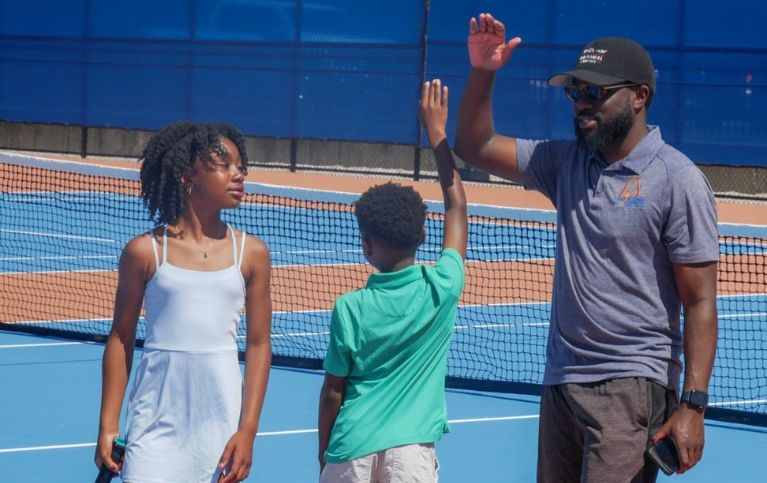
At the community level, ESLCTA contributes to safer and more connected neighborhoods by providing structured, positive activities for youth and adults. Community-based sports programs strengthen belonging, reduce isolation, and create spaces where people can interact around health-promoting activities rather than crisis or scarcity. This kind of programming matters in East St. Louis because it builds social cohesion while addressing disparities in access to safe recreation.
Creating a Lasting Legacy
The long-term impact is generational. Participants who gain discipline, resilience, leadership skills, and healthy habits through tennis are more likely to carry those strengths into adulthood. When they return as mentors, volunteers, or advocates, they reinforce local capacity and create a cycle of opportunity. In this way, access to tennis improves not only the lives of individual students, but also the lives of families, the health culture of households, and the broader trajectory of the East St. Louis community across generations.


